
The Streaming Industry Has Outgrown Subscriber Count
Not long ago, success in the streaming industry was measured by one number: subscriber growth. Quarterly reports revolved around how many new users had signed up, investors rewarded platforms with rising subscriber counts, and marketing teams were tasked with acquiring as many customers as possible. That playbook worked when streaming was still in its rapid growth phase. Today, however, the market has matured. Consumers have more choices than ever before, subscription fatigue is becoming increasingly common, and the cost of acquiring new viewers continues to rise. In this environment, adding subscribers is no longer enough to build a successful streaming business. A platform with one million subscribers but low engagement and high churn is far less resilient than one with half the audience but exceptional viewer loyalty and strong monetization. Sustainable growth now depends on understanding how audiences behave after they subscribe—not just how many people click the sign-up button. This shift has elevated streaming KPIs from operational metrics to strategic business indicators. CEOs are no longer asking, “How many subscribers did we gain this month?” Instead, they’re asking questions that reveal the long-term health of the business:- Are viewers returning regularly?
- Which content keeps audiences engaged?
- Where are we losing viewers?
- Which monetization models are delivering the best returns?
Why Traditional Streaming Metrics No Longer Tell the Full Story
Subscriber count remains an important business metric, but it tells only the beginning of the story. It measures acquisition—not engagement, satisfaction, or profitability. Consider two streaming platforms. One reports impressive subscriber growth every quarter yet struggles with declining watch time and increasing cancellations. The other grows more steadily but consistently retains viewers, generates higher revenue per user, and keeps audiences actively engaged throughout the year. Which business is in a stronger position? Increasingly, it’s the second one. The streaming companies leading the market today aren’t necessarily the ones with the largest audiences. They’re the ones that understand viewer behavior well enough to make informed decisions about content, product development, monetization, and customer experience. Instead of relying on vanity metrics, successful CEOs are building organizations that use analytics to answer a much more important question:How healthy is our streaming business?
1. Monthly Active Viewers Reveal True Engagement
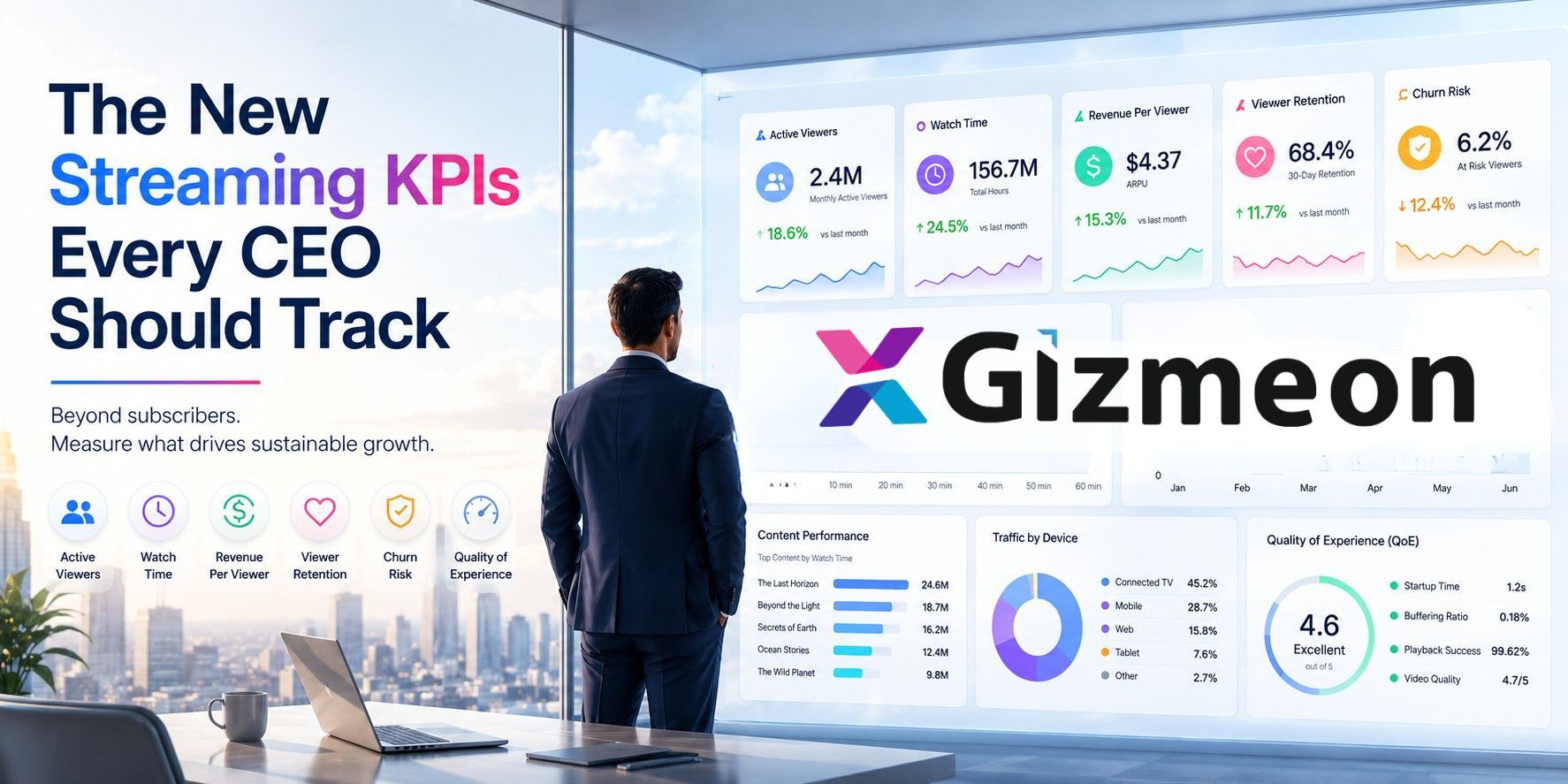
Subscriber numbers tell you who signed up. Monthly Active Viewers (MAV) tell you who actually showed up. This distinction has become increasingly important as streaming services compete for consumer attention across multiple platforms. A large subscriber base may look impressive on paper, but if only a small percentage of those users actively watch content each month, growth becomes difficult to sustain. Tracking monthly active viewers helps executives understand whether their platform remains relevant in viewers’ daily entertainment habits. A growing active audience often indicates that content strategies, recommendations, and user experiences are working together effectively. Conversely, declining activity can provide an early warning that engagement is beginning to weaken—even before cancellations start to increase.2. Viewer Retention Is More Valuable Than Viewer Acquisition
Acquiring new subscribers has never been more expensive. Marketing costs continue to climb, competition has intensified, and audiences now have countless entertainment options available at their fingertips. That’s why retaining existing viewers has become one of the most valuable objectives for streaming businesses. Retention measures how consistently audiences return over time. Strong retention reflects a platform that continues delivering value through compelling content, personalized recommendations, and a reliable viewing experience. Poor retention, on the other hand, often signals deeper issues. It may indicate that viewers struggle to discover relevant content, lose interest because of inconsistent programming, or simply don’t feel connected to the platform. For CEOs, retention isn’t just a customer success metric—it’s a direct indicator of long-term business sustainability.3. Content Completion Rate Measures Real Content Performance
High view counts don’t always translate into meaningful engagement. If thousands of viewers start watching a movie but abandon it within the first few minutes, the content may not be delivering on audience expectations. Completion rate provides a much clearer picture by measuring how much of a program viewers actually finish. This metric offers valuable insights beyond content quality alone. Low completion rates may suggest misleading thumbnails, ineffective recommendations, pacing issues, or mismatched audience targeting. High completion rates, on the other hand, often indicate that the platform is successfully connecting the right viewers with the right content. Rather than asking which titles attract the most clicks, executives should focus on which titles consistently hold audience attention.4. Average Watch Time Reflects Viewer Loyalty
Every streaming platform competes for the same limited resource: attention. Average watch time reveals whether viewers are simply browsing—or genuinely engaging with your platform. The longer audiences spend watching, the stronger their connection becomes. Longer viewing sessions naturally increase opportunities for content discovery, advertising, subscriptions, and customer retention. More importantly, watch time reflects habit formation. When users regularly spend meaningful amounts of time on a platform, it becomes part of their routine rather than just another app on their device. For many CEOs, increasing watch time has become a stronger indicator of platform health than increasing downloads.5. Session Frequency Shows Whether Viewers Keep Coming Back
A viewer who watches once every few months contributes far less value than someone who returns multiple times each week. Session frequency measures exactly that—how often audiences revisit the platform within a given period. Frequent visits are rarely accidental. They’re usually the result of consistent content releases, effective personalization, timely notifications, and a viewing experience that encourages audiences to explore more. Over time, high session frequency strengthens customer loyalty while reducing the likelihood of churn. Rather than focusing solely on attracting new users, streaming leaders should ask a more strategic question: Are we creating enough reasons for viewers to return tomorrow?6. Churn Prediction Is More Powerful Than Churn Reporting
Most businesses measure churn after customers have already left. Modern streaming platforms are beginning to approach the problem differently. Instead of simply reporting cancellations, advanced analytics can identify behavioral patterns that suggest a viewer may soon disengage. Declining watch time, fewer completed sessions, reduced login frequency, or changing viewing habits often appear long before a subscription is cancelled. This predictive approach gives businesses an opportunity to intervene through personalized recommendations, targeted promotions, or improved content discovery before viewers decide to leave. For CEOs, preventing churn is significantly more valuable than explaining it.7. Revenue Per Viewer Provides a Better Measure of Business Health
Not every subscriber contributes the same business value. Some users generate recurring subscription revenue, while others contribute through advertising, premium content purchases, live event access, or hybrid monetization models. Revenue Per Viewer helps executives understand how effectively their platform converts engagement into sustainable business growth. It shifts attention away from audience size alone and toward audience value. As streaming businesses continue adopting AVOD, SVOD, TVOD, FAST channels, and hybrid monetization strategies, this metric becomes increasingly important for long-term planning.8. Content Efficiency Determines Return on Investment
Content remains one of the largest investments for any streaming platform. But success isn’t determined by how much content is available—it’s determined by how effectively that content performs. Content efficiency compares investment against measurable outcomes such as watch time, viewer retention, revenue generation, and engagement. This allows executives to identify which content categories consistently deliver value and which fail to justify their costs. Rather than commissioning more content, leading streaming businesses are becoming better at commissioning smarter content.9. Advertising Performance Has Become a Strategic KPI
The continued growth of AVOD and FAST channels has transformed advertising performance into a boardroom conversation. Today’s CEOs need visibility into metrics such as ad fill rate, ad completion rate, viewer drop-off during advertisements, and overall advertising revenue. These indicators reveal whether monetization strategies are supporting—or harming—the viewing experience. Finding the right balance is essential. Too many advertisements may increase short-term revenue while reducing viewer satisfaction and long-term retention. Sustainable advertising strategies optimize both business performance and audience experience.10. Quality of Experience (QoE) Impacts Every Other KPI
Even exceptional content cannot compensate for poor streaming performance. A platform that buffers frequently, takes too long to load, or suffers playback interruptions will inevitably lose viewers, regardless of its content library. That’s why Quality of Experience (QoE) has become one of the most important executive-level metrics in modern streaming businesses. While QoE includes several technical measurements, CEOs don’t need to monitor every engineering detail. Instead, they should pay close attention to indicators that directly influence customer satisfaction, including:- Startup time
- Buffering frequency
- Playback failures
- Video quality consistency