
What Is a CTV Advertising Platform?
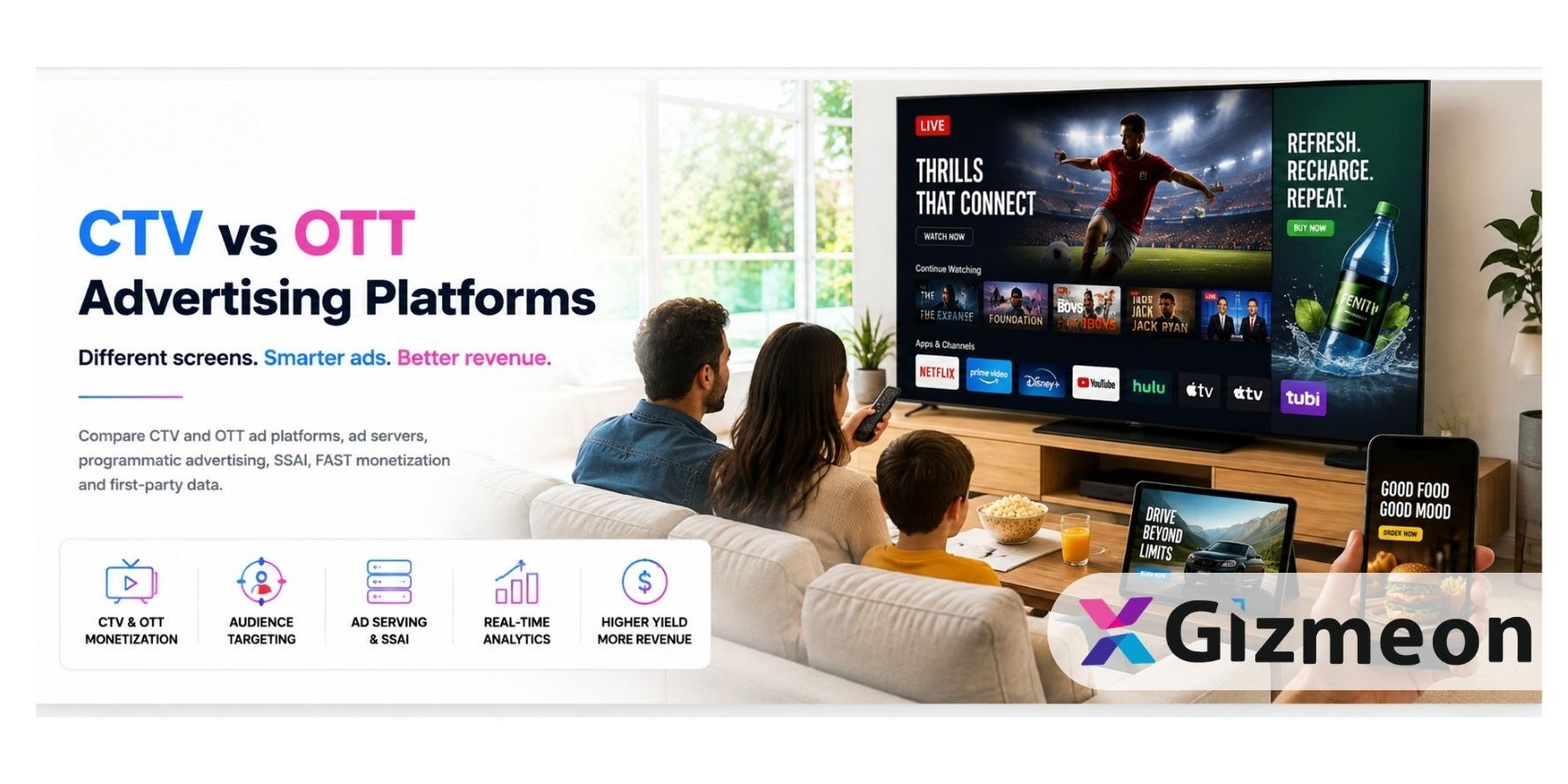
A CTV ad platform is technology that enables advertisers, publishers and streaming services to manage, deliver, target and measure advertising on connected television environments. Connected TV includes internet-connected smart TVs and television-connected devices such as Roku, Amazon Fire TV, Apple TV and other streaming platforms. CTV advertising typically delivers video ads within streaming content, combining the large-screen viewing experience of traditional television with digital targeting and measurement capabilities. For a streaming publisher, a CTV advertising platform can include several components:- Ad serving and ad decisioning
- Audience targeting
- Programmatic advertising integrations
- Campaign management
- Server-side ad insertion (SSAI)
- First-party audience data
- Frequency capping
- Advertising analytics
- Yield optimization
- Revenue reporting
What Is an OTT Ad Platform?
An OTT advertising platform enables advertising within video content delivered over the internet rather than traditional cable, satellite or broadcast distribution. OTT is broader than CTV because streaming content can be consumed across connected TVs, smartphones, tablets, desktops and other internet-connected devices. CTV can therefore be viewed as a specific viewing environment within the broader OTT ecosystem. For example, a viewer watching the same streaming service on a smartphone is consuming OTT content but not CTV content. The same viewer watching that service on a smart TV is consuming OTT content in a CTV environment. This distinction is important for media companies because an effective OTT advertising platform needs to support a wider range of devices, viewing environments and advertising requirements.CTV vs OTT Advertising: What’s The Difference?
The easiest way to understand the difference is: OTT describes how video is delivered. CTV describes where that video is viewed.| Feature | CTV Advertising | OTT Advertising |
| Primary environment | Connected TV | Internet-connected devices |
| Devices | Smart TVs, Roku, Fire TV, Apple TV and similar devices | TV, mobile, tablet, desktop |
| Viewing experience | Primarily large-screen, lean-back | Multi-device |
| Advertising | Primarily video | Video and device-specific formats |
| Targeting | Audience and household/device signals | Audience, device, context and behavioral signals |
| Monetization | AVOD, FAST, programmatic | AVOD, FAST, SVOD/AVOD hybrids and other models |
| Delivery | CSAI or SSAI | CSAI or SSAI |
| Measurement | Digital audience and ad metrics | Cross-device and streaming metrics |
CTV Advertising Platform vs OTT Advertising Platform: What Technology Matters?
Choosing a streaming ad platform requires looking beyond the label. A modern CTV or OTT ad platform should connect several technology layers.1. Ad Server
The CTV ad server or OTT ad server is responsible for managing advertising inventory and determining which advertisements should be delivered. It can manage campaigns, targeting rules, ad breaks, creative assets and delivery requirements. For publishers, the ad server becomes an important part of monetization because it connects available inventory with advertising demand.2. Programmatic Advertising
Programmatic CTV advertising allows advertising inventory to be bought and sold through automated technology. Instead of every campaign being negotiated manually, programmatic infrastructure can connect publishers with demand sources and automate parts of the buying and selling process. This creates opportunities for streaming platforms to increase access to advertising demand while giving advertisers more efficient ways to reach specific audiences.3. Audience Targeting
One of the major advantages of digital streaming advertising is the ability to use audience signals to make advertising more relevant. Depending on the platform and applicable privacy requirements, targeting can incorporate factors such as:- Content preferences
- Viewing behavior
- Device information
- Geographic signals
- Audience segments
- First-party data
- Contextual information
4. Server-Side Ad Insertion
SSAI, or server-side ad insertion, integrates advertisements into the video stream before that stream reaches the viewer’s device. For CTV and FAST environments, SSAI can help create a more television-like viewing experience by reducing visible transitions between content and advertising. It also becomes increasingly important as streaming publishers scale across devices, channels and large audiences.5. Analytics and Measurement
A streaming advertising platform should also answer a fundamental question: What happened after the ad was delivered? Advertisers and publishers need visibility into metrics such as impressions, completion rates, engagement, audience reach, frequency and revenue. For publishers, analytics can reveal which content attracts valuable audiences, which advertising inventory performs best and where monetization opportunities exist.CTV and OTT Monetization: How Streaming Platforms Generate Ad Revenue
Advertising is becoming an increasingly important part of streaming monetization because media companies do not have to depend entirely on subscriptions. An OTT platform can combine several models: AVOD — Advertising Video on Demand Viewers access content for free while the platform generates revenue through advertising. FAST — Free Ad-Supported Streaming TV Linear-style streaming channels are offered without a traditional subscription, with advertising supporting the business model. SVOD + Advertising A subscription service can introduce advertising alongside premium subscription tiers. Programmatic Advertising Available inventory can be connected to programmatic demand sources (SSP, DSP, CTV SSP, CTV DSP). Direct-Sold Advertising Media companies can sell advertising inventory directly to brands and agencies. This flexibility is particularly important as streaming businesses experiment with hybrid monetization strategies. The objective is no longer simply to maximize subscriptions. It is to maximize the lifetime value of the audience relationship.FAST Channel Advertising and Monetization: How FAST Channels Make Money
FAST channels have created another important opportunity for streaming advertising. A FAST service combines linear-style programming with free, ad-supported access. Because FAST channels are designed for continuous viewing, advertising becomes a fundamental component of the experience rather than an optional revenue stream. For a FAST operator, the technology stack may need to support: Content scheduling → ad breaks → ad decisioning → programmatic demand → SSAI → CTV delivery → measurement This means FAST channel monetization depends heavily on the advertising infrastructure behind the viewer experience. A platform that supports FAST should therefore go beyond simply creating and distributing channels. It should provide the tools required to manage advertising inventory, deliver ads reliably and understand the resulting revenue.CTV Advertising vs Traditional TV Advertising
CTV advertising is not simply traditional television advertising delivered through the internet. The fundamental difference is the technology underneath the viewing experience. Traditional television advertising has historically relied on scheduled programming and broad audience definitions. CTV advertising introduces digital capabilities such as audience targeting, automated buying, dynamic ad insertion and more granular measurement.| Traditional TV Advertising | CTV Advertising |
| Broad audience targeting | More granular audience targeting |
| Fixed programming environment | Streaming environment |
| Traditional ad breaks | Dynamic ad insertion |
| Limited digital measurement | Digital measurement |
| Linear distribution | Internet-based distribution |
| Primarily direct sales | Direct + programmatic opportunities |