
Streaming Has Become an Advertising Business
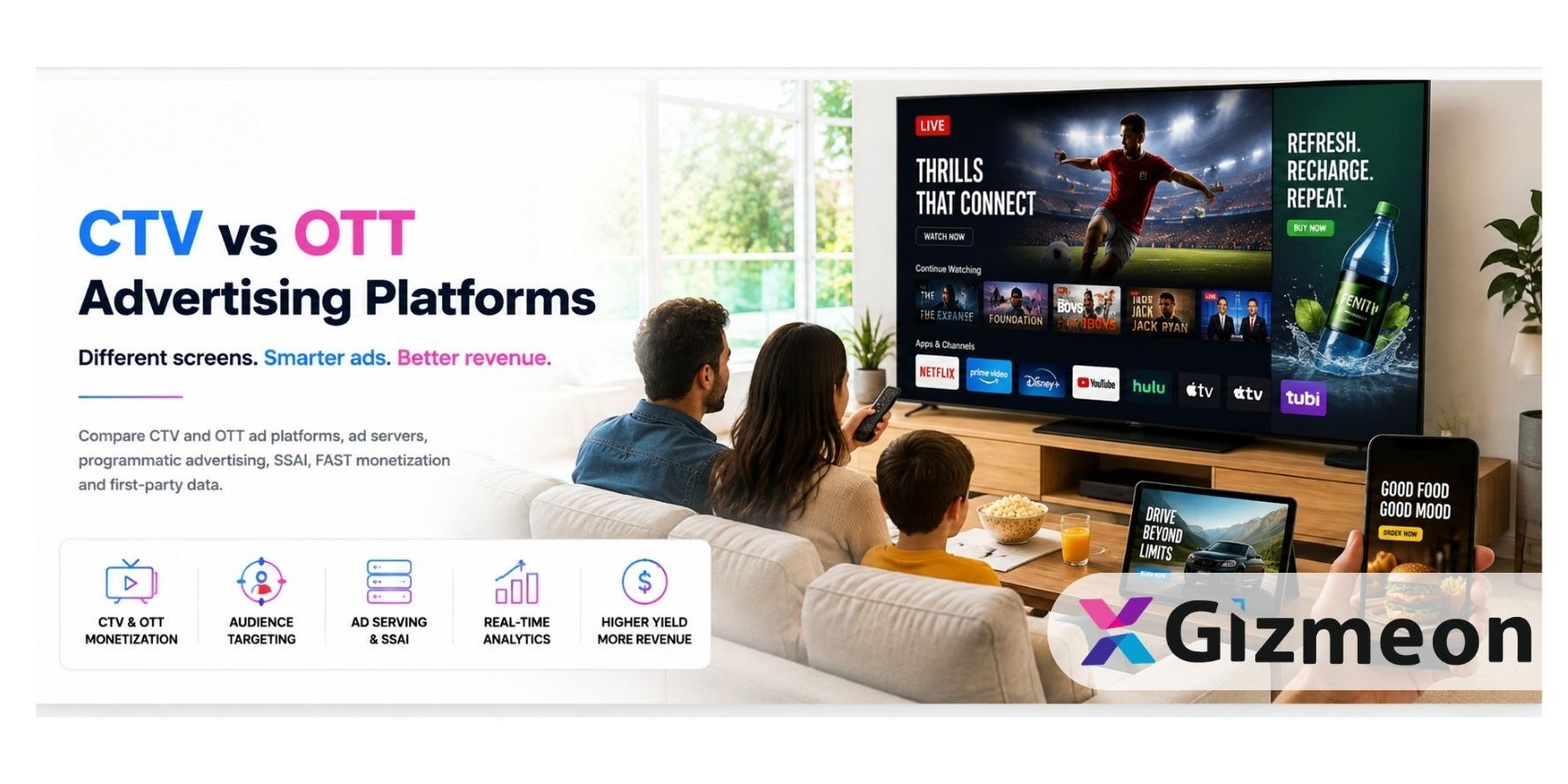
For years, the streaming industry was built around one goal: acquiring subscribers. Success was measured by how quickly platforms could grow their subscriber base, expand into new markets, and invest in exclusive content. The prevailing belief was simple—the larger the content library, the stronger the competitive advantage. That equation no longer holds true. As streaming services have matured, the cost of producing premium content has continued to rise while subscriber growth has slowed across many established markets. Consumers today have more streaming choices than ever before, making them increasingly selective about which services they pay for. Subscription fatigue has become a genuine challenge, forcing media companies to rethink how they generate sustainable revenue. This shift has accelerated the adoption of hybrid monetization, where subscription-based models coexist with advertising-supported experiences. Services that once relied almost entirely on monthly subscriptions are now embracing advertising as a core part of their business strategy. Netflix introduced its ad-supported tier to attract price-sensitive viewers. Amazon integrated advertising into Prime Video while continuing to offer premium viewing options. Disney has expanded ad-supported experiences across its streaming portfolio, while the rapid growth of FAST (Free Ad-Supported Television) channels demonstrates that audiences are increasingly comfortable exchanging advertisements for free, high-quality content. These aren’t isolated business decisions. They reflect a fundamental transformation in the economics of streaming. Today’s media companies are no longer monetizing content alone—they’re monetizing viewer attention. That distinction is important because attention is measurable. Every viewing session generates valuable insights about audience preferences, engagement, content consumption, and advertising performance. Combined with first-party data, these insights enable platforms to deliver more relevant advertisements while improving revenue opportunities for publishers and advertisers alike. As a result, advertising has moved from being an additional revenue stream to becoming a strategic capability embedded within the streaming platform itself. And that’s where AdTech begins.What Exactly Is an Ad Server?
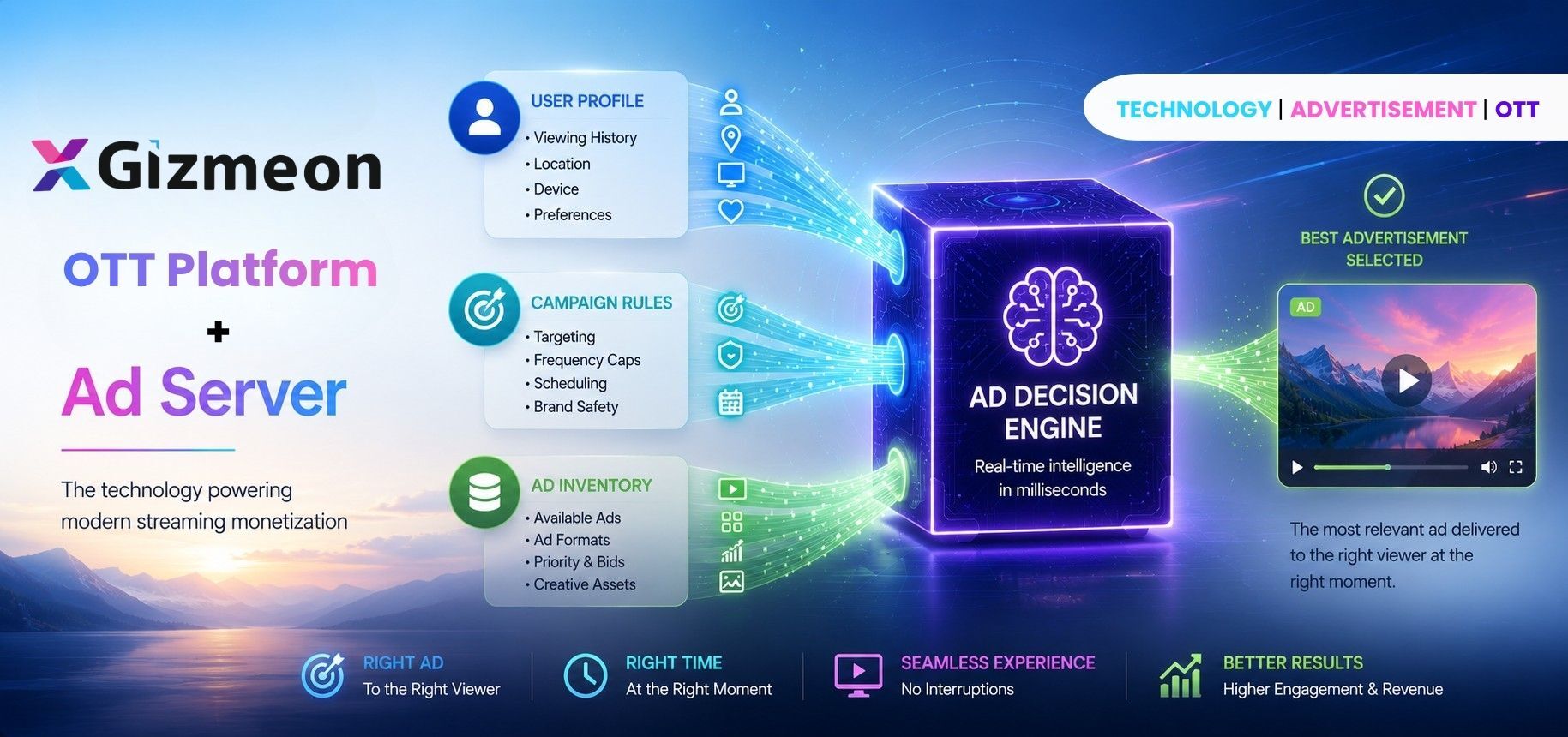
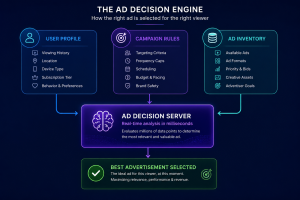
When people hear the term Ad Server, they often imagine a simple system responsible for displaying video advertisements before or during playback. In reality, it performs a far more sophisticated role. An Ad Server acts as the intelligence layer that connects advertisers, campaigns, viewers, content, and streaming infrastructure. Rather than randomly inserting advertisements into a video, it evaluates multiple variables in real time before deciding which ad should be delivered. Every ad request triggers a series of decisions. The platform identifies the viewer. It determines the device being used. It checks the viewer’s location. It evaluates available advertising inventory. It considers campaign targeting rules, frequency limits, audience segments, and delivery priorities. Only after processing these factors does the Ad Server select the most appropriate advertisement and deliver it with minimal impact on playback. In other words, the Ad Server is not simply responsible for serving ads—it is responsible for optimizing advertising decisions. Modern Ad Servers also perform several critical functions that directly influence platform revenue and user experience, including:- Campaign management and scheduling
- Audience targeting and segmentation
- Programmatic advertising integration
- Frequency capping
- Inventory optimization
- Real-time reporting and analytics
- Dynamic ad insertion
- Revenue tracking and performance measurement
The OTT Ad Delivery Pipeline: What Happens Before an Ad Reaches the Viewer?
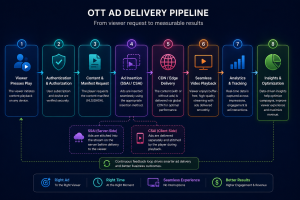
For most viewers, advertising appears effortless. A video starts playing. An advertisement is shown. The content resumes. Behind that seemingly simple experience is a complex series of real-time decisions taking place in just a few milliseconds. Every advertisement shown on an OTT platform is the result of multiple systems working together to deliver the right message to the right viewer without disrupting playback. Understanding this workflow is essential because it demonstrates why an Ad Server has become one of the most important components of modern streaming infrastructure. Let’s look at what actually happens when a viewer presses Play.Step 1: The Viewer Requests Content
When a user selects a movie, TV show, live event, or FAST channel, the OTT application first authenticates the viewer and verifies their subscription or access rights. The platform then requests the video’s playback manifest—a file that tells the player where the video segments are stored and how they should be delivered. At this stage, the platform also gathers valuable contextual information such as:- User profile
- Device type
- Geographic location
- Network quality
- Viewing history
- Subscription tier
- Content category
Step 2: The Ad Decision Server Gets Involved
Once an advertising opportunity is detected—whether it’s a pre-roll, mid-roll, or post-roll—the platform sends a request to the Ad Decision Server (ADS). This is where intelligence begins. Instead of selecting an advertisement randomly, the Ad Server evaluates several factors simultaneously:- Which campaigns are currently active?
- Which advertisers are targeting this audience?
- Has this viewer already seen the same advertisement?
- Is the campaign pacing correctly?
- Does the advertisement meet geographic restrictions?
- Which advertisement generates the highest revenue while satisfying campaign priorities?
Step 3: Delivering the Advertisement
Once the advertisement has been selected, it needs to be inserted into the viewing experience. This is where OTT platforms generally follow one of two approaches:- Client-Side Ad Insertion (CSAI)
- Server-Side Ad Insertion (SSAI)
SSAI vs. CSAI: Understanding the Difference
As advertising has become central to streaming monetization, the debate between Server-Side Ad Insertion (SSAI) and Client-Side Ad Insertion (CSAI) has become increasingly important. Choosing the right approach isn’t simply a technical decision—it directly affects viewer satisfaction, advertising performance, and revenue generation.-
Client-Side Ad Insertion (CSAI)
-
Server-Side Ad Insertion (SSAI)
- Improved playback consistency across devices
- Reduced impact from ad blockers
- Better support for live streaming and FAST channels
- Higher advertising completion rates
- More reliable measurement and reporting
Which Approach Is Better?
The answer depends on the platform’s objectives. CSAI remains valuable for applications that prioritize interactive advertising experiences or require greater client-side flexibility. SSAI, on the other hand, is increasingly becoming the standard for professional streaming platforms that prioritize scalability, premium user experience, and advertising reliability. Many modern OTT businesses now combine both approaches depending on content type, device capabilities, and advertising strategy. This hybrid architecture allows platforms to optimize revenue while maintaining a seamless viewing experience.Advertising Infrastructure Is Becoming a Competitive Advantage
A few years ago, the discussion around OTT technology focused primarily on video quality, buffering, and content delivery. Today, another question has become equally important: How efficiently can the platform monetize every viewing session? The answer depends largely on the sophistication of its advertising infrastructure. An intelligent Ad Server doesn’t just improve revenue. It enhances campaign performance, reduces operational complexity, improves audience targeting, supports programmatic demand, and delivers a better experience for viewers by ensuring advertisements remain relevant and unobtrusive. As streaming continues to evolve, advertising technology is no longer operating alongside the OTT platform. It has become an integral part of the platform itself. And that is precisely why understanding how advertisements are delivered is no longer just a concern for advertising teams—it’s becoming essential knowledge for anyone building the next generation of streaming platforms.How AI Is Redefining OTT Advertising?
Artificial Intelligence has already transformed how streaming platforms recommend content, personalize homepages, and improve search experiences. Its next major impact is advertising. Traditional OTT advertising relies heavily on predefined rules. Advertisers specify a target audience, campaign duration, budget, and frequency, while the Ad Server delivers ads based on those parameters. AI introduces an entirely new layer of intelligence. Instead of simply following static rules, AI can continuously analyze viewer behavior and optimize advertising decisions in real time. It can identify which audiences are most likely to engage with a campaign, predict viewer preferences, reduce repetitive ad exposure, and even recommend the best time to serve an advertisement without disrupting the viewing experience. For streaming platforms, this translates into measurable business outcomes:- Higher ad completion rates
- Improved campaign performance
- Better audience segmentation
- Increased advertising revenue
- Enhanced viewer experience
Why FAST Channels Depend on Advanced AdTech
The rapid growth of Free Ad-Supported Television (FAST) has fundamentally changed how media companies think about monetization. Unlike subscription platforms, FAST services generate revenue primarily through advertising. Every commercial break represents an opportunity to maximize inventory value while maintaining a seamless television-like viewing experience. That simply isn’t possible without sophisticated advertising infrastructure. Managing advertisements within a FAST channel involves far more than inserting commercials between programs. Platforms must dynamically schedule campaigns, rotate creatives, manage inventory, comply with regional advertising regulations, support multiple advertisers simultaneously, and deliver advertisements without interrupting continuous linear playback. During live programming, the challenge becomes even greater. Advertising decisions often need to be made in real time while thousands—or even millions—of viewers are watching simultaneously. This requires an advertising architecture capable of handling high volumes of requests without introducing latency or playback interruptions. As FAST adoption continues to accelerate worldwide, advanced AdTech is no longer a value-added feature. It is the technology that enables the entire business model.First-Party Data Is Becoming Streaming’s Greatest Asset
One of the biggest advantages streaming platforms have over traditional television is their ability to understand audience behavior. Every interaction generates valuable data. Which content attracts new viewers? Which advertisements are completed? When do viewers leave? Which genres generate the highest engagement? Which devices are used most frequently? How often do users return? Unlike traditional broadcasting, OTT platforms can answer these questions with remarkable precision. This information—commonly referred to as first-party data—has become one of the industry’s most valuable strategic assets. As privacy regulations evolve and third-party cookies continue to decline, advertisers increasingly rely on trusted first-party data to deliver more relevant campaigns. Streaming platforms are uniquely positioned to provide this intelligence because they own the relationship with the viewer. When combined with an intelligent Ad Server, first-party data enables far more than audience targeting. It supports:- Context-aware advertising
- Behavioral segmentation
- Frequency optimization
- Campaign performance analysis
- Revenue forecasting
- Personalized viewer experiences