
“The question is no longer whether creators can compete with traditional media companies. The question is whether traditional media companies can adapt quickly enough to compete with creators.”
The Evolution of the Creator Economy
The first generation of creators focused almost entirely on audience growth. Success was measured through followers, views, likes, and engagement metrics. Monetization primarily came through brand partnerships, sponsorships, affiliate marketing, and platform revenue-sharing programs. While this model generated substantial opportunities, it also introduced significant limitations. Creators became increasingly dependent on algorithmic distribution. Revenue fluctuated based on platform policy changes. Audience relationships remained largely controlled by third-party networks. Even creators with millions of followers often lacked direct ownership of their customer base. As creators matured, so did their businesses. Many began asking a different question: What happens if the platform changes the rules? For media entrepreneurs building long-term businesses, relying exclusively on external platforms became increasingly difficult to justify. The result has been a strategic shift toward audience ownership. Creators are investing in direct relationships with viewers through subscriptions, memberships, email databases, premium content offerings, and dedicated digital platforms. Rather than serving as content suppliers for larger platforms, they are becoming platform owners themselves. This transition mirrors the evolution previously experienced by traditional media companies during the rise of digital distribution. The difference is that creators are moving faster.From Personal Brand to Media Brand
Historically, media companies were defined by three core assets:- Content
- Distribution
- Audience
The missing component has traditionally been distribution infrastructure.Launching a television network, a subscription service, or a global media platform required significant investment, technical expertise, and operational resources. Those barriers are rapidly disappearing. Modern streaming technologies have dramatically lowered the cost and complexity of launching branded media experiences. Creators can now operate digital properties that would have required enterprise-level infrastructure only a few years ago. This has fundamentally changed the economics of media ownership. A creator with a loyal audience can launch a branded streaming destination, offer exclusive content, build recurring subscription revenue, and distribute content across mobile, web, and connected television platforms. At that point, the distinction between “creator” and “media company” becomes increasingly difficult to define.
Why Audience Ownership Has Become a Strategic Priority?
The most valuable asset in modern media is not content. It is audience access. Every major digital platform competes for attention. Algorithms determine discoverability. Policy updates impact visibility. Revenue-sharing structures evolve without notice. For creators building sustainable businesses, these variables create significant uncertainty. Direct audience ownership offers a solution. When audiences engage through a creator’s own platform, the relationship becomes significantly more valuable. The creator gains access to first-party audience data, behavioral insights, subscription management, engagement analytics, and direct communication channels. This creates opportunities that extend far beyond content monetization. Audience ownership enables:- Recurring subscription revenue
- Premium memberships
- Community engagement
- Live events
- Merchandise sales
- Direct sponsorship opportunities
- Cross-platform content distribution
The Rise of Creator-Owned Streaming Platforms
Streaming is no longer reserved for major broadcasters and entertainment conglomerates. Today, creators across industries are launching dedicated streaming platforms designed around their audiences and content strategies.Fitness creators are building subscription-based wellness networks. Educators are creating premium learning platforms. Podcasters are expanding into video-on-demand services. Lifestyle influencers are developing exclusive membership ecosystems. Faith-based creators are launching digital ministries with global reach.The common theme is simple. They are creating destinations instead of relying solely on distribution channels. A social media platform may introduce an audience to a creator. A streaming platform enables that audience relationship to deepen. Rather than competing for attention inside someone else’s ecosystem, creators can build environments where they control the user experience, monetization strategy, and long-term growth roadmap.
Why Connected TV Is Changing the Equation
One of the most important developments in this transformation is the growth of connected television. For years, creator content was primarily associated with mobile devices and social feeds. That distinction is disappearing. Consumers increasingly expect digital content to be available wherever they watch video. This includes smartphones, tablets, websites, smart televisions, streaming devices, and connected home entertainment systems. As a result, creators are no longer competing solely against other creators. They are competing for viewing time alongside major streaming services. This creates new opportunities. A creator with a dedicated streaming app available on Roku, Apple TV, Fire TV, Android TV, Samsung TV, and LG TV can extend engagement beyond social media consumption and into the living room. The perceived value of content changes dramatically when it becomes part of a premium viewing experience.The result is stronger audience retention, higher engagement, and greater monetization potential.
The FAST Channel Opportunity
Another significant trend accelerating the creator-to-network transition is the rise of FAST channels. Free Ad-Supported Streaming Television has become one of the fastest-growing segments within the streaming industry. For creators and independent media brands, FAST channels offer a compelling distribution model. Instead of relying exclusively on subscriptions, creators can leverage advertising-supported programming to reach broader audiences while generating revenue. The model is particularly attractive because it combines the accessibility of traditional television with the flexibility of digital distribution. As FAST ecosystems continue to expand globally, creators have an opportunity to participate in television-like experiences without the historical costs associated with broadcast infrastructure. This represents another example of how modern technology is democratizing media ownership.Building a Media Business Instead of a Content Business
Many creators focus heavily on content production while overlooking business architecture. The most successful creator-led organizations are approaching growth differently. They are building systems rather than channels. This includes:- Owned distribution platforms
- Diversified monetization models
- Audience data strategies
- Cross-platform content ecosystems
- Long-term brand development
The Infrastructure Behind the Transformation
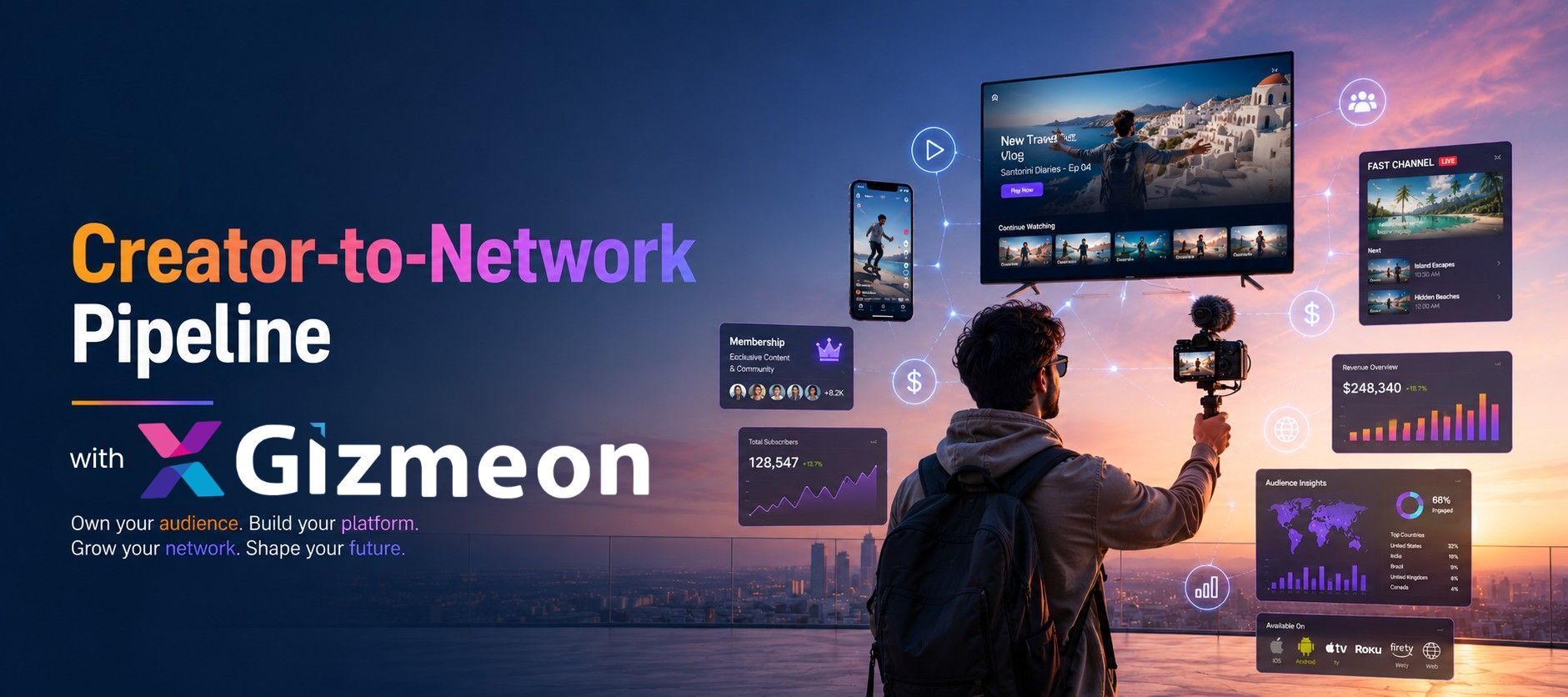
The emergence of creator-owned media brands would not be possible without significant advances in streaming technology. Modern OTT platforms have made it possible to launch branded streaming services without extensive technical resources or development teams. Solutions such as Gizmeon’s streaming platform provide creators with the infrastructure needed to operate like modern media companies rather than social media personalities. Through a single ecosystem, creators can launch branded applications across mobile devices, web browsers, smart TVs, and connected television platforms while managing content, audience engagement, analytics, monetization, and distribution from a centralized environment. This significantly reduces the complexity traditionally associated with launching and scaling a streaming business. More importantly, it allows creators to focus on content strategy and audience growth while maintaining ownership of their brand experience.The Future Belongs to Creator-Led Media Networks
The creator economy is entering a new phase. The next generation of market leaders will not be defined solely by audience size. They will be defined by ownership. The creators who succeed over the next decade will increasingly resemble media companies rather than social media personalities. They will control distribution, diversify revenue streams, leverage audience intelligence, and build direct relationships with viewers. This evolution does not signal the end of social platforms. Far from it. Platforms such as YouTube, Instagram, TikTok, and others will remain powerful discovery engines. However, discovery and ownership are no longer the same thing. The most sophisticated creators understand this distinction.“Social platforms generate awareness. Owned platforms generate enterprise value.”As technology continues to reduce barriers to entry, the creator-to-network pipeline will accelerate. More creators will launch streaming destinations. More audiences will engage directly with the brands they trust. More creator-led businesses will emerge as serious competitors within the broader media ecosystem. The future of media may not belong exclusively to broadcasters, studios, or streaming giants. It may belong to the creators who learn to think like them.