
Why AI Is Quietly Becoming Streaming’s Most Valuable Asset
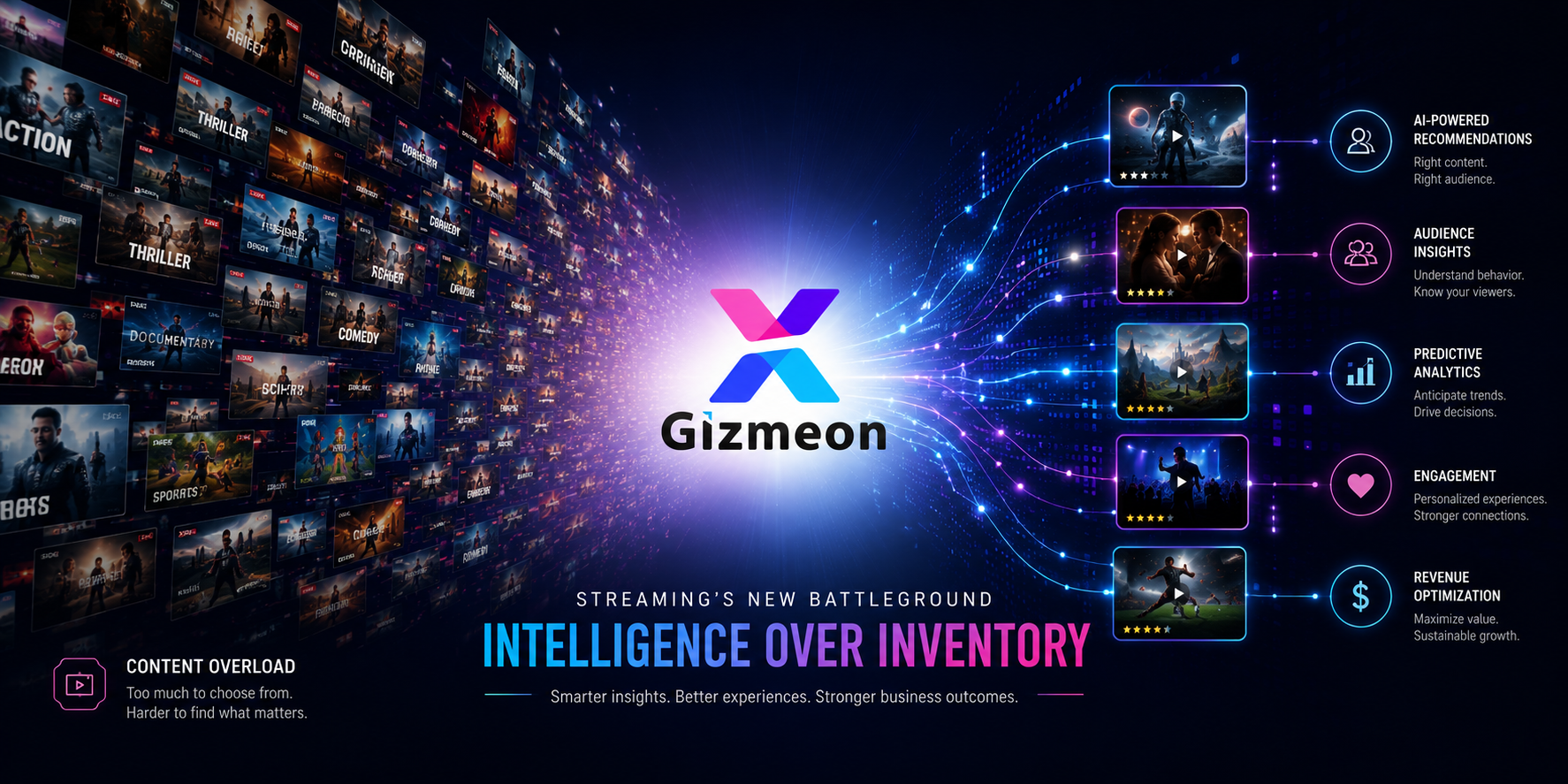
For nearly two decades, the streaming industry has been defined by one principle: content wins. The rise of Netflix transformed entertainment by proving that original programming and exclusive libraries could build enormous subscriber businesses. Disney leveraged decades of intellectual property. Amazon invested heavily in premium productions. Media companies worldwide entered the streaming race believing that scale, exclusivity, and content ownership would ultimately determine winners. This assumption shaped the economics of streaming. Billions of dollars flowed into production, licensing, acquisitions, and original programming. Entire business strategies revolved around content volume and exclusivity. Today, however, the industry finds itself confronting a very different reality. Consumers have access to more content than at any point in entertainment history. Viewers navigate dozens of streaming services, social platforms, creator channels, podcasts, gaming ecosystems, and short-form video applications every day. The challenge facing audiences is no longer access. The challenge is discovery. As the streaming industry matures, a new competitive layer is quietly emerging. Artificial intelligence, audience intelligence, predictive analytics, personalization, and behavioral insights are beginning to shape how platforms retain audiences, improve monetization, and create meaningful engagement. The next major battleground in streaming may not be content inventory. It may be intelligence.The End of the Content Arms Race
The streaming wars created one of the largest content investment cycles in media history. Major services spent unprecedented amounts on programming in pursuit of subscriber growth. Original content became the primary weapon in a battle for audience attention. This approach undoubtedly created remarkable successes. Yet it also produced challenges. The economics of content acquisition continue to become more difficult. Production costs have increased. Subscriber growth has slowed in many mature markets. Customer acquisition expenses continue to rise. Audiences frequently rotate between services, subscribing temporarily before cancelling. At the same time, smaller streaming businesses face an entirely different reality. Regional broadcasters, niche streaming services, sports networks, educational platforms, independent studios, and creator-driven businesses cannot compete by simply outspending global giants. Building massive content libraries is often financially impractical. This creates an important question. If every company cannot compete on inventory, what becomes the next source of competitive advantage? The answer increasingly appears to be audience understanding.The Attention Economy Changes Everything
Modern consumers no longer consume entertainment in predictable ways. A viewer may watch a streaming series on television during the evening, consume short-form content on mobile devices throughout the day, listen to podcasts while commuting, and engage with creators across social platforms. Attention has become fragmented. This fragmentation fundamentally changes the economics of streaming. Platforms are no longer competing solely against one another. They compete against every form of digital entertainment. Social media, gaming, user-generated content, and creator economies now compete directly for audience attention. As a result, the amount of available content has become less important than the ability to surface relevant content. Research consistently shows that consumers often spend several minutes deciding what to watch. Many abandon platforms entirely when content discovery becomes frustrating. Subscription fatigue continues to affect consumer behavior, forcing services to justify their value on an ongoing basis. The future of streaming therefore depends not only on what content is available, but on how effectively platforms connect audiences with the right experiences. This is where artificial intelligence begins to play a transformational role.The Emergence of the Intelligence Layer
Artificial intelligence in streaming is frequently associated with recommendation engines. While recommendations remain important, the actual influence of AI extends much further. The intelligence layer encompasses the technologies that allow streaming platforms to understand, interpret, and respond to audience behavior. Audience analytics, personalization systems, engagement models, predictive behavior analysis, content discovery, advertising intelligence, search optimization, and operational automation are increasingly becoming core components of modern streaming businesses. The objective is not simply automation. The objective is relevance. Two streaming services offering similar content may deliver dramatically different results based on how effectively they understand their audiences. A platform capable of identifying viewing habits, engagement patterns, and behavioral preferences can create experiences that feel increasingly personalized. Consumers now expect this. Music services understand listening habits. E-commerce platforms predict purchasing behavior. Social media platforms personalize feeds in real time. Streaming audiences increasingly expect similar experiences. As intelligence improves, personalization becomes a business advantage rather than simply a feature.The Risks of AI
Despite its potential, AI is not without challenges. The industry must address important questions:Privacy
Consumers expect responsible data practices.Transparency
Recommendation systems should remain understandable and trustworthy.Bias
Algorithms must avoid reinforcing undesirable patterns.Authenticity
Generative AI raises concerns around content integrity.Over-Automation
Human editorial judgment remains essential. AI should enhance decision-making, not replace it entirely. The most successful platforms will likely combine human expertise with intelligent systems.Data Is Becoming Streaming’s Most Valuable Asset
Every interaction within a streaming platform generates information. Viewing behavior, session duration, device preferences, completion rates, search patterns, engagement times, content performance, subscription behavior, and advertising interactions collectively create enormous volumes of data. Historically, much of this information remained underutilized. Today, artificial intelligence allows organizations to transform data into actionable intelligence. Platforms can identify content that drives retention, understand why audiences leave, recognize engagement patterns, and predict future behavior. Audience segmentation becomes increasingly sophisticated. Marketing becomes more targeted. Monetization becomes more efficient. Importantly, data itself is not the competitive advantage. Many companies possess substantial amounts of audience information. The advantage lies in interpretation. The organizations capable of turning audience signals into meaningful decisions will increasingly outperform those that merely collect information. This shift explains why many streaming executives now discuss first-party audience data as one of their most valuable strategic assets.The Rise of Personalized Experiences
Personalization has evolved from a convenience feature into a business requirement. Modern consumers expect digital experiences to understand their preferences. They expect relevant recommendations, customized interfaces, intelligent search, and content suggestions that reflect their interests. The impact of personalization extends far beyond convenience. Platforms that deliver relevant experiences often experience stronger engagement, improved retention, higher viewing times, and greater customer satisfaction. Personalized environments reduce friction, improve discovery, and strengthen user relationships. The streaming industry increasingly recognizes that content abundance alone does not create engagement. Relevance creates engagement. This becomes particularly important as content libraries continue to expand. Large inventories can become liabilities if users struggle to discover meaningful content. Artificial intelligence helps solve this challenge by narrowing choice, improving discovery, and delivering experiences that feel increasingly individual.Emerging Formats Accelerate the Need for Intelligence
The rise of vertical video, creator-driven content, microdrama formats, and mobile-first viewing further reinforces the importance of audience intelligence. Consumers now move seamlessly between television screens, smartphones, tablets, social platforms, and short-form experiences. Viewing behavior continues to evolve rapidly. This creates significant complexity for streaming businesses. Understanding which formats resonate with specific audiences, how viewers transition between devices, and what drives engagement across different content experiences becomes increasingly valuable. Short-form content consumption patterns differ significantly from traditional television viewing. Mobile-first audiences behave differently than connected TV viewers. Creator content generates different engagement dynamics than professionally produced programming. Artificial intelligence allows platforms to understand these differences. As new formats continue to emerge, audience intelligence becomes essential for understanding how these experiences coexist within modern media ecosystems.Advertising and Monetization Become More Intelligent
The growth of FAST channels and ad-supported streaming further demonstrates the importance of audience intelligence. Advertising increasingly depends upon relevance, targeting, and contextual understanding. Advertisers expect measurable performance and meaningful audience insights. Streaming businesses today often manage multiple revenue models simultaneously. Subscription services coexist alongside advertising, transactional content, and hybrid monetization strategies. Artificial intelligence can improve these decisions by identifying behavioral patterns, predicting audience value, and optimizing monetization opportunities. As advertising becomes increasingly data-driven, intelligence directly influences revenue potential. The platforms that understand audiences most effectively may also become the platforms that monetize audiences most efficiently.Where GIZMEON Fits
As streaming evolves toward audience intelligence and data-driven experiences, technology providers are also adapting. GIZMEON positions itself as an AI-first media and ad-tech company focused on modern streaming businesses. Its platform capabilities include:- OTT application ecosystems.
- FAST channel solutions.
- Audience analytics.
- AI-powered recommendations.
- Content discovery.
- Monetization technologies.
- Multi-platform distribution.
- Advertising solutions.
- Viewer engagement insights.