
The rapid growth of streaming services has transformed how audiences consume video content. From entertainment networks and educational platforms to niche creator-led services, organizations around the world are launching their own OTT streaming platforms.
But behind every successful streaming service lies a powerful system responsible for organizing content, managing video libraries, and controlling how content is published across devices.
This system is known as an OTT CMS (Over-The-Top Content Management System).
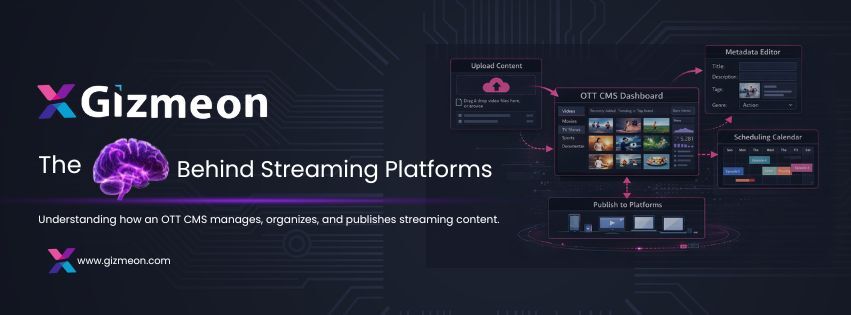
While viewers interact with beautifully designed apps and seamless video playback, the real operational engine behind a streaming platform is its CMS. An OTT CMS acts as the control center of a streaming platform, managing everything from content ingestion to scheduling releases and organizing video libraries.
For companies looking to launch or manage a streaming service, understanding how an OTT content management system works is essential. It plays a critical role in maintaining efficient workflows, managing content catalogs, and delivering videos across multiple devices.
What Is an OTT CMS?
An OTT CMS (OTT content management system) is the backend software used to manage, organize, and distribute video content on a streaming platform.
In simple terms, it is the dashboard where platform administrators control the entire streaming content ecosystem.
Unlike traditional website CMS platforms that manage articles and images, an OTT CMS is specifically designed to handle video streaming content, media libraries, and publishing workflows.
A modern OTT platform CMS allows streaming services to:
- upload and ingest video content
- organize movies, shows, and episodes
- manage thumbnails and artwork
- add metadata such as titles and descriptions
- schedule content releases
- publish content across mobile, web, and smart TV apps
Every time viewers browse a streaming service and see categories, shows, and thumbnails, the information they see is structured and delivered through the OTT content management system.
Without a powerful CMS for streaming platforms, managing large video libraries and delivering consistent content experiences would be extremely difficult.
Why an OTT CMS Is the Brain of a Streaming Platform
Running a streaming platform involves managing a constantly growing library of video content. Platforms often host thousands of videos, episodic shows, documentaries, and live channels.
Without a centralized management system, organizing and delivering this content efficiently becomes nearly impossible.
An OTT CMS acts as the brain of a streaming platform because it controls how content is stored, structured, and delivered to viewers.
Key responsibilities of an OTT CMS include:
Content Organization
The CMS structures video libraries into categories, collections, and playlists so viewers can easily browse and discover content.
Publishing Control
Platform administrators can publish or remove content instantly through the CMS dashboard.
Multi-Device Distribution
The CMS ensures that content is delivered consistently across mobile apps, smart TVs, web players, and streaming devices.
Platform Management
Through a centralized dashboard, administrators can manage the entire streaming platform from a single interface.
Because of these capabilities, the OTT CMS becomes the central control system powering the streaming service backend.
Content Ingestion in an OTT CMS: How Streaming Platforms Upload Videos
One of the first steps in managing a streaming platform is content ingestion.
Content ingestion refers to the process of uploading and preparing video files so they can be streamed across the platform.
An OTT CMS simplifies this process by providing administrators with tools to upload and process video content efficiently.
Typical content ingestion workflows include:
- Uploading video files to the streaming platform
- Processing and encoding the video for streaming formats
- Adding metadata such as titles, descriptions, and categories
- Uploading thumbnails and promotional artwork
- Organizing the content into collections or playlists
A well-designed OTT content management system allows streaming platforms to ingest and process large volumes of video content quickly.
This ensures that new movies, episodes, and programs can be published efficiently without technical complexity.
How an OTT CMS Organizes Movies, Shows, and Video Libraries
Once content is uploaded to a streaming platform, the next challenge is organizing it in a way that allows viewers to easily discover videos.
This is where the video content management system becomes essential.
Streaming platforms organize their content libraries using several layers of categorization.
Common organization structures include:
- genres (documentary, sports, education, drama)
- collections or playlists
- seasons and episodes for TV shows
- featured or trending sections
- curated content categories
Through the CMS dashboard, administrators can determine exactly how content appears on the platform interface.
For example, a documentary streaming platform may organize content into categories such as:
- science and innovation
- investigative journalism
- environmental storytelling
- historical documentaries
A properly structured OTT CMS ensures that viewers can browse these categories easily and discover relevant content quickly.
This improves the user experience while also increasing viewer engagement.
Content Scheduling in an OTT CMS
Another powerful feature of an OTT content management system is content scheduling.
Many streaming platforms release content according to planned schedules. This may include weekly episode releases, seasonal launches, or event-based programming.
An OTT CMS allows administrators to schedule content releases in advance.
Scheduling features often include:
- setting release dates for movies or shows
- scheduling episodic content
- managing regional content availability
- controlling time-based promotional releases
Content scheduling is especially important for streaming platforms that rely on regular programming updates to maintain audience engagement.
For example, releasing a new episode every week encourages viewers to return to the platform regularly.
Through the CMS dashboard, administrators can manage these schedules without needing additional technical support.
Metadata and Thumbnails in an OTT Content Management System
Content discovery is heavily influenced by metadata and visual presentation.
Metadata refers to the descriptive information attached to each video on a streaming platform.
This information may include:
- title
- description
- cast information
- genre classification
- keywords
- ratings or content tags
An OTT CMS allows administrators to manage this metadata efficiently.
Accurate metadata improves content discovery because it helps organize the platform’s content library and improves search functionality within the streaming service.
Thumbnails and artwork also play an important role in viewer engagement.
When users browse a streaming platform, the first thing they notice is the visual thumbnail representing each video.
Through the CMS dashboard, administrators can upload and manage thumbnails, preview images, and promotional banners.
These visual elements significantly influence viewer decisions about what content to watch.
The Role of an OTT CMS in Multi-Device Streaming Platforms
Modern streaming services must operate across multiple devices.
Viewers expect to watch content seamlessly on:
- smartphones
- smart TVs
- tablets
- web browsers
- streaming devices like Roku and Fire TV
An OTT CMS ensures that content libraries and metadata remain consistent across all these devices.
When administrators update information inside the CMS, the changes automatically reflect across the entire streaming ecosystem.
This centralized control ensures that streaming platforms maintain a consistent user experience regardless of where viewers access the content.
How Gizmeon Supports OTT Content Management with GIZMOTT
As streaming platforms grow more complex, organizations require powerful infrastructure to manage their content efficiently.
Gizmeon provides this infrastructure through GIZMOTT, a comprehensive OTT platform solution designed to simplify streaming platform management.
GIZMOTT includes an advanced OTT CMS that allows content owners, broadcasters, and media organizations to manage their video libraries through a centralized dashboard.
Through the platform’s CMS capabilities, administrators can:
- ingest and upload video content
- organize movies, shows, and video libraries
- manage metadata and thumbnails
- schedule content releases
- publish content across mobile, web, and smart TV platforms
Because GIZMOTT supports multi-device streaming infrastructure, the CMS acts as the control hub for managing streaming content across the entire platform ecosystem.
By combining content management tools with streaming infrastructure, Gizmeon enables organizations to launch and operate fully branded OTT platforms without building complex backend systems.
The Future of OTT Content Management Systems
As streaming platforms continue to expand, OTT CMS technology is expected to evolve significantly.
Future OTT content management systems may integrate features such as:
- AI-powered content recommendations
- automated metadata tagging
- personalized content curation
- advanced audience analytics
- integrated marketing tools
These innovations will help streaming platforms manage increasingly large video libraries while delivering more personalized experiences to viewers.
At the same time, the demand for scalable OTT platform infrastructure will continue to grow as more creators, media companies, and businesses launch their own streaming services.
In a nutshell…
While viewers experience streaming platforms through user-friendly apps and seamless playback, the real engine powering these services is the OTT CMS.
An OTT content management system controls how video content is uploaded, organized, scheduled, and delivered across devices.
From content ingestion and library organization to metadata management and multi-device distribution, the CMS plays a central role in maintaining an efficient streaming platform.
Solutions like GIZMOTT provide the infrastructure needed to manage these workflows effectively, enabling organizations to launch scalable streaming services with powerful content management capabilities.
As the streaming industry continues to grow, the importance of intelligent OTT CMS platforms will only increase, shaping the future of digital video distribution.